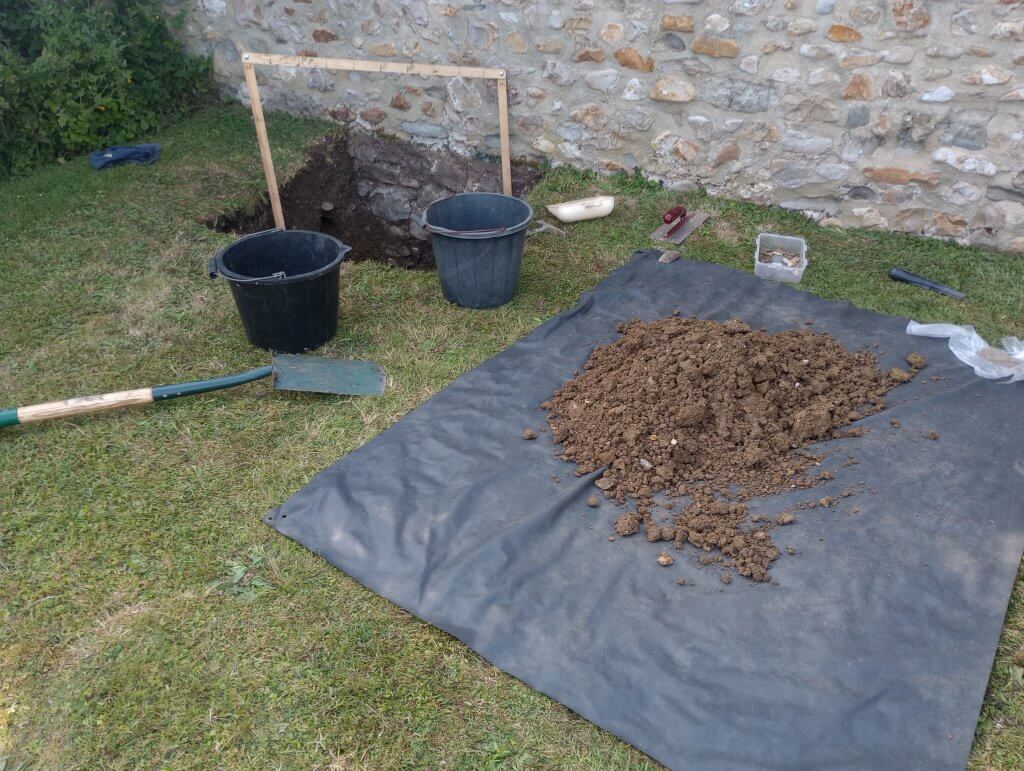
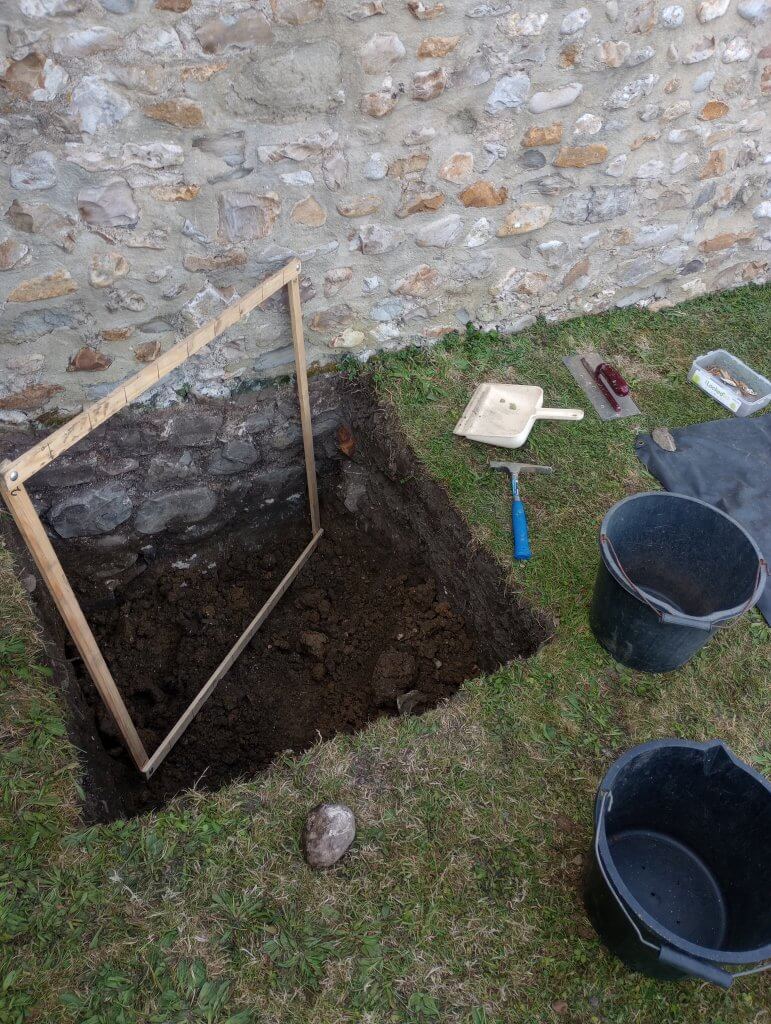
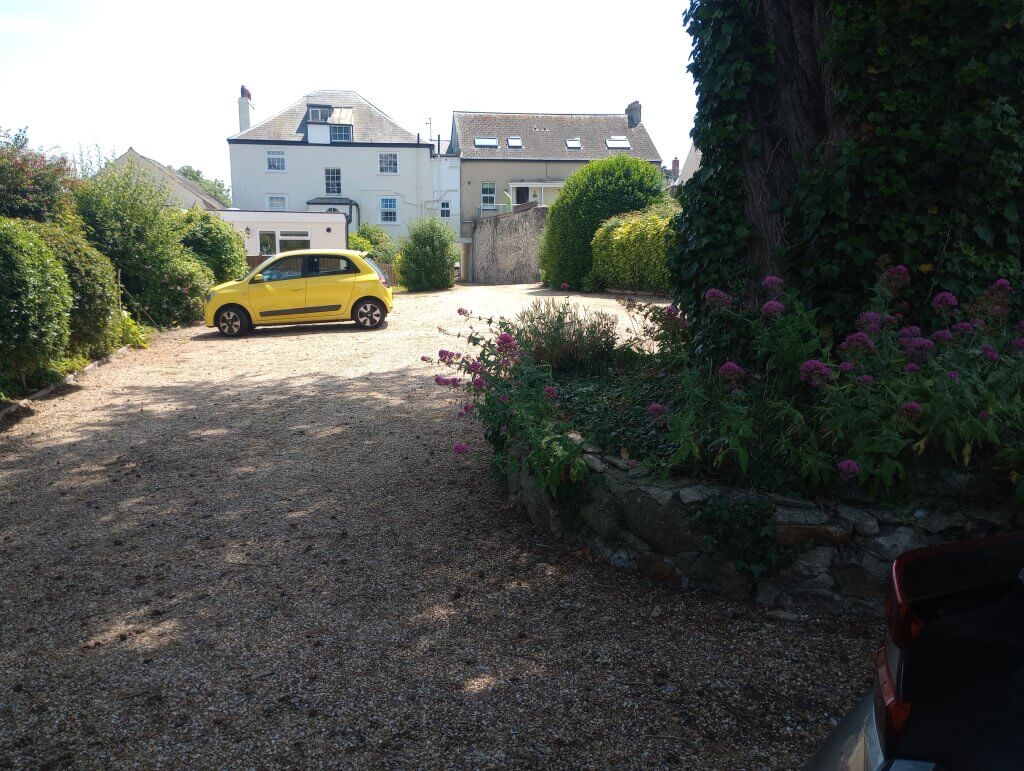
I volunteered at The Big Dig in Charmouth on Saturday afternoon, 14th June 2025. Our aim was to determine the age of an old monastery wall in the gardens of Luttrell House (white building pictured below). It was my first time doing any form of archeology so I was excited to find out about the process.
Below, are a few organisers and volunteers who were excavating near the base of the back wall. There was access to the wall in other gardens via gaps in the fence which were also being looked at. I think this was so they could get an average of the finds along the wall.
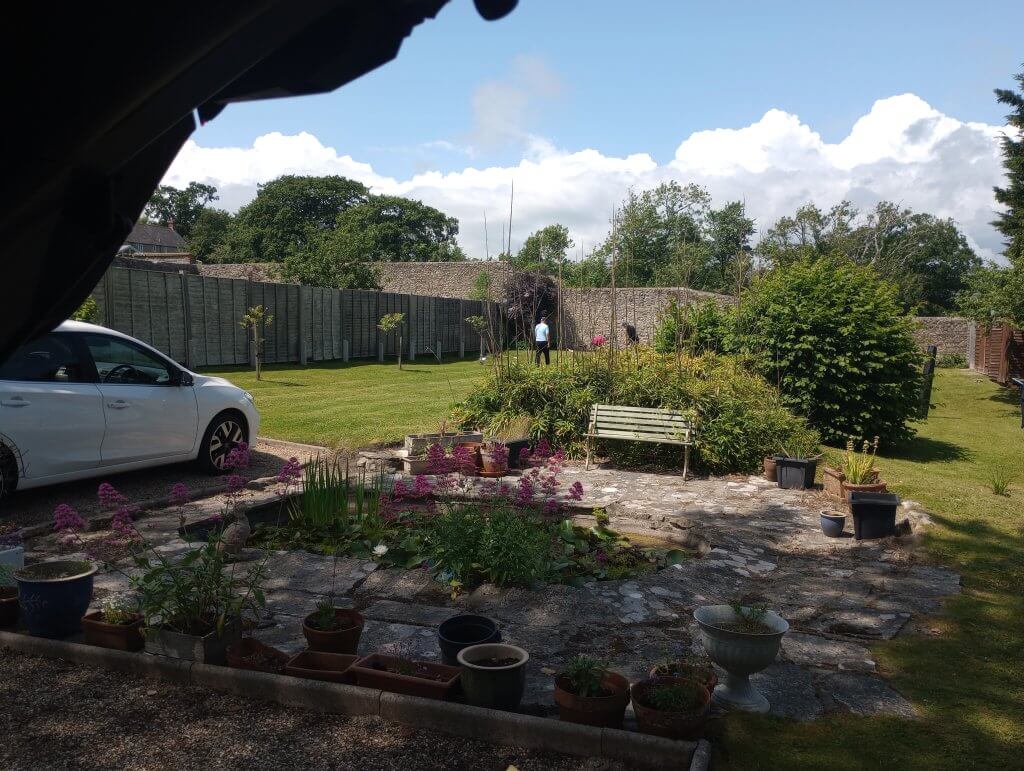
The tools I bought with me were my Roughneck shovel, a pair of gloves, my Dewalt toolbag and of course suncream. The scene below felt much like something from The Detectorists, and I was intrigued to find out what needed to be done, and what I was looking at. They were very happy for me to dig (I said I was good at it, having lots of practise).
Anatomy of a dig
From my short time there, I learned that there is a specific process of planning a dig. You need the following setup:
- 2 plastic tarpaulins or rubber sheets
- A small hand-held metal detecting wand
- One or two buckets
- A 1 metre by 1 metre foldable wooden frame square with 10 lines along each length at 10cm.
- A shovel
- A box for finds
Process
As I’d arrived about half way through this process, I asked the organisers how it worked and they told me the following. This process required about 3 people. To start, the wooden frame- which is a folding ruler of sorts is laid on the grass as a guide. You then cut around the outside edge of the shape with a sharp shovel to leave a mark on the grass. Taking the ruler guide away, you then start digging in one corner, until you get down to about 10cm. Once you have your depth gauge, you then clear out everything in that shape down to 10cm. The earth should be placed into one of the free buckets and given to the sorter. The sorting person, tips the bucket out onto the tarpaulin nearest the hole. Their job is to go over the pile of earth sifting it with their hands to find anything interesting and putting any finds in the plastic pot. Theres also a metal detecting/ spotting wand which will beep on proximity to anything metallic.
I was really excited to use one, as I’d seen it on The Detectorists. Just like with separating eggs, you have to alternate handfuls of soil, discarding bit by bit and retesting the kept soil. If the wand beeps in the hand with the soil, there’s something in it and you will be the hero of the day. I kept discarding soil and the wand kept beeping. I though wow beginners luck or what?! The organisers all jumped to attention thinking we’d found a roman coin or something. Suddenly, the penny dropped and I realised the wand was picking up my wedding ring through my glove! Rookie mistake- We all had a laugh.
Once all the soil has been checked, two people lift up the tarpaulin from both sides and dump it onto a larger sheet for the waste material. This mound was eventually to be put back in the hole once the job was done, so it was important to keep it neatly stored on the sheet.
Once all the soil has been dug down to approx 10cm square, all the finds are bagged in a labelled bag for that specific layer (I’m not using the correct terminology here). Then you go down another 10cm and repeat the process. Then you have a sample of finds at 10cm, 20cm and so on which making cataloging easier. Because I’m used to bottle digging, I was able to move a lot of earth quickly, and perhaps a bit fast for the sorting person. Because we weren’t having to use brushes and trowels like you see on TV, it wasn’t at all stuffy and frustrating and I liked the neatness of it. I did remark how technically, we could smash something on the way down- so I felt this technique is more geared towards dicsovering architectural detail than actual valuable artefacts. I actually felt like I wished bottle digging was more neat like this and less destructive, but often the ground I’ve been digging in is full of roots, weeds and rocks. This soil was fairly dry and clean overall. On layer 3, I uncovered a small hole which was just outside the top edge of the soil if the wall was North, this was NW. I was excited as it seemed to go quite deep, and I found it was from a rotten timber which had been buried in the garden and left a void.
About halfway through the day I met the owner of the garden who had given permission to dig. A lovely lady who told me about how the residents share the space there. In the middle of the lawn, there was a really deep and narrow hole, e.g. for a washing line. However, it wasn’t manmade from what we could see and was more of a sinkhole perhaps where a water tap or well used to be. I put 1.5 metre bamboo cane down it and it went all the way down. In the second picture, you can see that the ground bank up towards the wall, and the hole was on the lower bit. I asked the owner about bottles and she told me they’d found some interesting fragments on the east wall, near to where the old sheds were. I wished we’d dug there or at the sinkhole.
At the end of the day, two Detectorists joined the group from another group – Dorset Detectorists or something. They passed their detectors over the waste heap for a final check and it beeped a bit. There was a rusty metal nail probably used in the wall for vines.